


Project 2025: From Blueprint to Reality
What’s Already Happening? And What Comes Next?
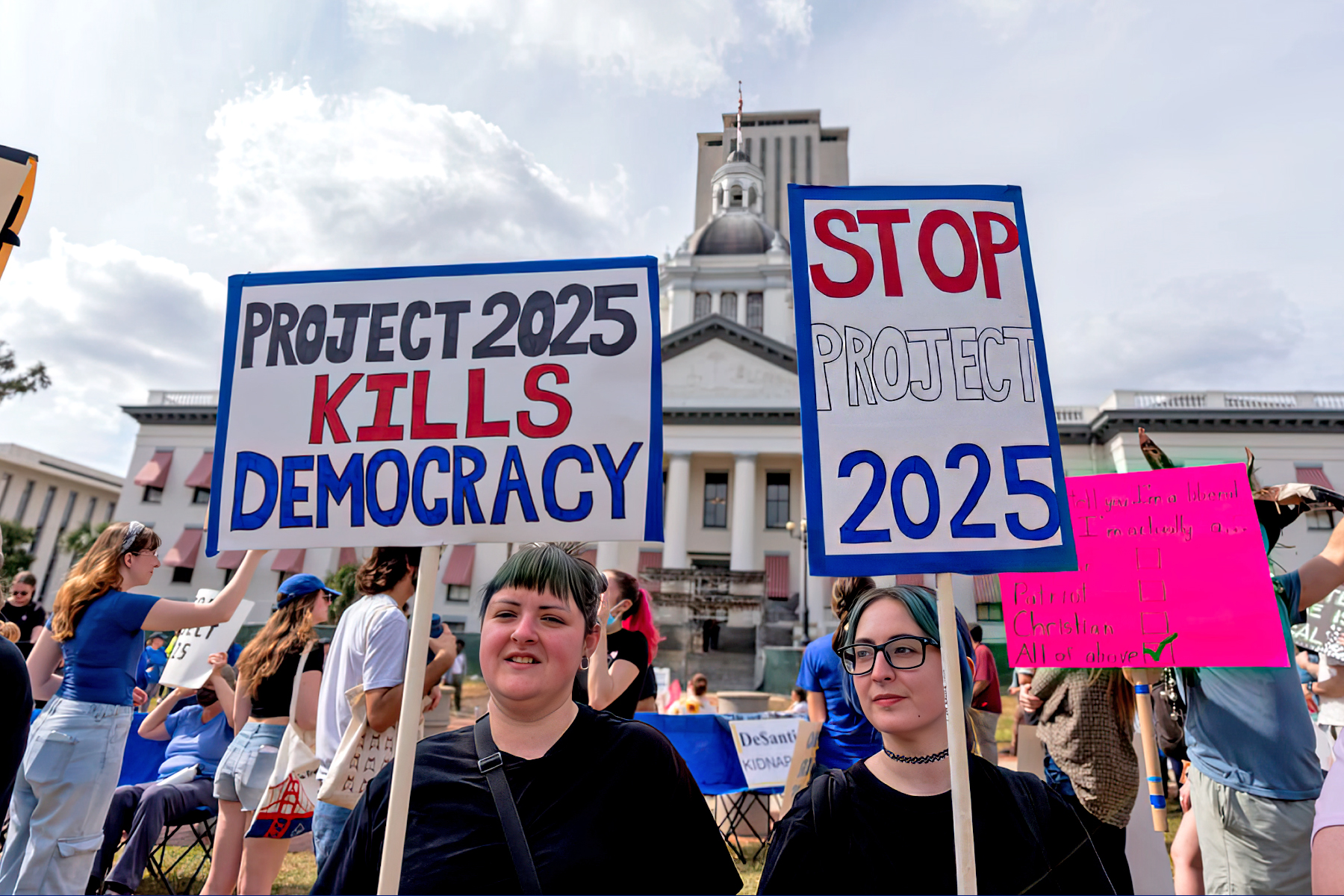
When people first starting hearing about Project 2025, it sounded too radical and fantastical to be true. But as soon as Trump was reelected, and Russell Vought, the principal architect of Project 2025, became the head of Trump’s Office of Management & Budget, the administration immediately began to methodically implement Project 2025, one chapter at a time. The result has been devastating – and we will soon have a government we don’t recognize anymore.
What the Plan Called For
At its core, Project 2025 focused on three things:
- Restructuring federal agencies (i.e. slash staff and cut funding)
- Expanding Presidential authority and control (the “Unitary Executive”)
- Shifting some public services to private companies
What We’re Starting to See
Some of those ideas are no longer just on paper:
- We all saw the damage wreaked by DOGE. Thousands of career civil servants were fired without cause and agency budgets have been slashed across the board.
- New changes to federal personnel rules make it easier to replace career federal civil servants with Trump loyalists.
- More decisions being made at the top by Presidential Executive Order, rather than through our Constitutionally mandated legislative process (The framers of the Constitution created three equal branches of government – this is being dismantled.)
- Thousands of federal health care jobs are are being cut, weakening the CDC’s ability to support state and local health departments—especially in rural areas that rely heavily on federal expertise.
- Health policy and authority is shifting away from professional, expert CDC guidance toward crony political leadership—including proposals that the CDC should not issue independent public health recommendations at all —raising concerns about consistency and science-based decision-making.
- A central goal of Project 2025 is to reduce state reliance on FEMA (federal disaster assistance) making it harder for states to receive federal aid. We’re already seeing this — Los Angeles officials continue to encounter a freeze or slowdown in FEMA reimbursements relating to the Palisades fire.
- Changes to climate-related infrastructure (NOAA/weather) lead to a weakened federal response to natural disasters, just as the attempt to shift more emergency responsibility away from the federal government to state and local levels is occuring. Last month Kansas residents were left with little advance notice before April tornadoes hit. This was a direct result of staffing cuts and operational changes at the National Weather Service that reduced weather balloon launches and left offices understaffed, which degraded forecast accuracy and contributed to shorter warning times putting lives at risk.
Of particular importance to those of us in Calaveras County and the Sierra Nevada:
- Reduced Forest Service staffing means fewer crews for thinning, prescribed burns, and trail maintenance—key tools for lowering wildfire risk.
- Greater emphasis on commercial logging (McClintock’s favored strategy) over targeted forest restoration may shift how forests are managed, with mixed implications for long-term resilience.
- The Project’s streamlined environmental reviews allow projects to move faster, but can raise concerns about impacts to watersheds, wildlife, and protected lands (another aspect supported by McClintock as he sides with big industry ahead of best interests of his constituents).
- Shifting more wildfire responsibility to state and local levels put added pressure on already resource-constrained rural communities.
Key figures behind Project 2025 are now in positions of power, helping translate the blueprint into policy. This includes leadership shaping budget priorities and agency direction in ways that align closely with the original document.
None of this is complete—but it’s no longer theoretical.
Why It Matters Here
For rural communities, this isn’t abstract. We rely more on federal services for:
- Social Security and SNAP benefits
- Veterans care
- Agriculture and land management
- Disaster response
When those systems change—even gradually—it can mean:
- Longer wait times
- Fewer local resources
- Less consistency
And fewer alternatives when something doesn’t work.
A Pattern Worth Noticing
There’s a name for what this is and it’s happening now – it’s the “hollowing out” of agencies.
The system stays in place—but works less efficiently than it used to.
Not gone.
But thinner.
Less reliable.
You may still have the same office or service, just not the same level of support behind it. The result is that people lose confidence in their government agencies, and stop expecting services that they used to rely on. Mission accomplished.
A Familiar Example
Even institutions like PBS and NPR have shown how funding changes and pressure can leave something still standing—but operating at a lower capacity. As part of their implementation of Project 2025, Congress eliminated the Corporation for Public Broadcasting, the primary funder of public television stations nationwide. The courts eventually found this move to be illegal, but the damage had already been done. Public TV and radio stations are now scrambling to make up for the lost revenue while maintaining the programming that so many have relied on.
That’s how change often happens: Not all at once, but step by incremental step.
The Bottom Line
This isn’t about politics
It’s about paying attention to what’s happening in real time:
- A written plan
- Changes that align with it
- And more still in progress
Final Thought
Big changes don’t always arrive all at once.
Sometimes they happen piece by piece—
until things are still there…
but don’t work the way they used to.
In case you missed it, the Administration recently released their proposed federal budget for the next fiscal year. In a future blog post, we’ll look at this federal budget plan and see what it tells us about where these changes may be heading next because once it’s in the approved budget – it’s happening.